Thursday, August 16, 2018

Intro to Latin, Part I

BRUEGEL, Pieter the Elder. The Tower of Babel. 1563.
Oil on oak panel. Kunsthistorisches Museum, Vienna.
We are still preparing for our journey. Yesterday we discussed the reasons it is worthwhile to invest one's intellectual energy in the study a "dead" language. Today we look into the history and origins of lingua Latina. Yesterday we answered the question, "Why Study Latin?" Today we answer the questions, "What is Latin anyway, and where does come from?" This means that we will be peering into the history of language in general, which is a mysterious and mythic labyrinth of the foundations of the world.

Agenda:
  1. Oramus in Latina.
  2. Syllabi? (Turn them in)
  3. Latin Binder...anyone?
  4. Review Inflection: check out the madness
  5. Introductory Lectures on Latin:
    1. Where does Latin come from?
      1. Languages of the World: read Genesis 7-11 
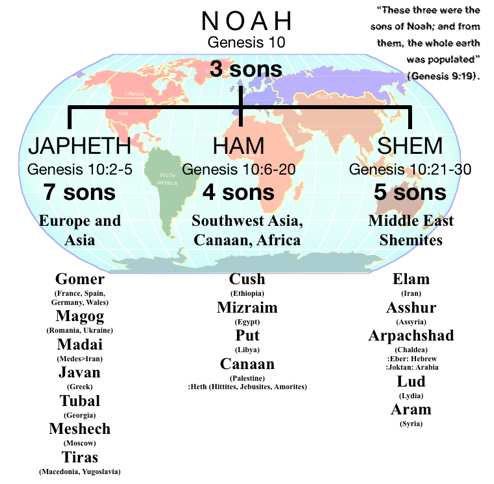
      2. 16-17 Language Families and the Sons of Noah
        1. The historical record shows that at this time languages explode on the scene.
        2. All of the 6000 languages in the world today fit into each "family"
        3. Latin is in what linguists call Indo-European Language family
      3. How language disproves Evolution:
        1. Languages start out complex and move to more simplistic forms--not the other way around. Consider the following transitions: 
          1. from Ancient Greek to Modern Greek (from 10 to 2 cases)
          2. from Ancient Latin to Classical Latin (from 9 to 5 cases)
          3. from Latin to the Romance Languages (from cases to no cases at all)
          4. from Anglo Saxon to Modern English (from case to nothing)
      4. When did Latin begin to be spoken? And who cares?
        1. 500 years before the Golden Age of Rome.
        2. The Latin tongue was in one of the "anti-types" to the story of the Tower of Babel: the world became one in the gospel of Christ.
        3. The decline of the Roman Empire, often called the "Dark Ages," gave birth to Christian Europe. The term the "Dark Ages" is of course a misnomer.
  6. Review HW:
    1. Turn in your silly-bus. 
    2. Study for Intro lecture quizzes next week. 

Resaluta ad scholam, discupli.

CARAVAGGIO. Narcissus. 1598-99.
Oil on canvas. Galleria Nazionale d'Arte Antica, Rome.
 Welcome back, discipuli. It is hard to return to school. Shakespeare compares it to leaving a loved one, "Love goes toward love as schoolboys from their books,. But love from love, toward school with heavy looks."  So why do must we do it? Consider this meditation, and consider the painting.

Here we have Narcissus who, as Ovid tells us, after hunting, "stooped to quench his thirst another thirst increased. While he is drinking he beholds himself reflected in the mirrored pool—and loves; loves an imagined body which contains no substance, for he deems the mirrored shade a thing of life to love. He cannot move, for so he marvels at himself, and lies with countenance unchanged, as if indeed a statue carved of Parian marble." Trying to relate to his own image, he dies there. Tiresias, the seer, prophecies his doom: "If he but fail to recognize himself, a long life he may have, beneath the sun." But Narcissus couldn't tear himself away from himself.

This is why education is so important; it must also draw us out of our own narcissism, which daily surrounds us and presses in on every side. Facebook, Twitter, Tumblr, video games, Insta, Snapchat, Netflix binges, and all other forms of entertainment often draw us away from God, Neighbor, and Nature.

In the end, school should therefore should promote love of Other Things, particularly the Good, the True, and the Beautiful. God has created a giant universe full of new and beautiful things, and He has created us to be full of wonder. He has not created us to wither our lives away as Narcissus did, enamored with oneself yet starving physically and intellectually.